



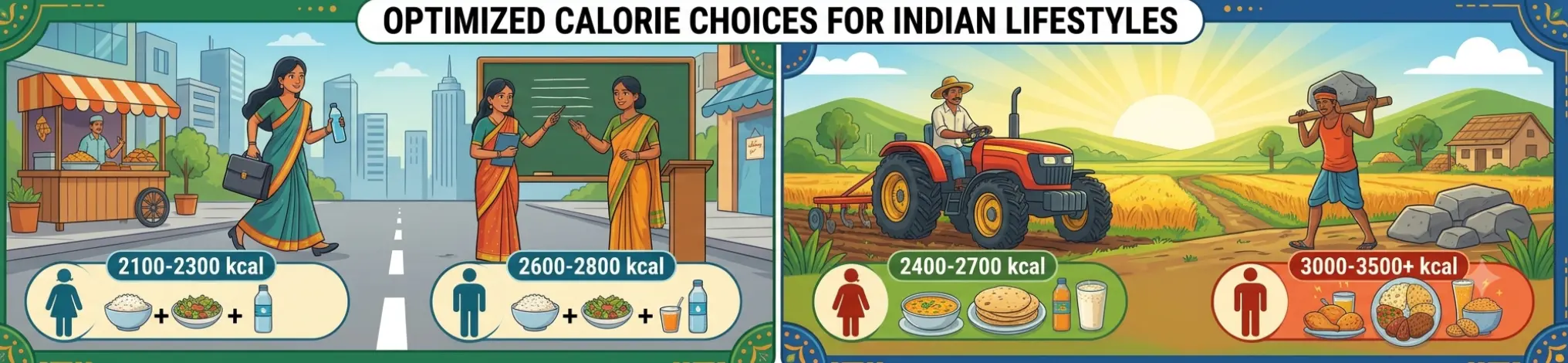
Have you ever wondered how many calories you should eat daily to stay healthy, lose weight or build muscle? Your daily calorie requirement depends on several factors, including your age, gender, body weight, height and physical activity.
For example, an office employee who spends most of the day sitting may need fewer calories than a construction worker, farmer or person who performs intense workouts regularly.
For Indians, understanding daily calorie requirements is particularly useful because our meals can include a wide variety of foods, from idli, dosa and rice to chapati, dal, vegetables, eggs and chicken.
In this guide, we will explain how many calories Indians need every day, how calorie requirements change with activity levels, and how to adjust your diet according to your fitness goals.
1. What Are Calories and Why Do They Matter?
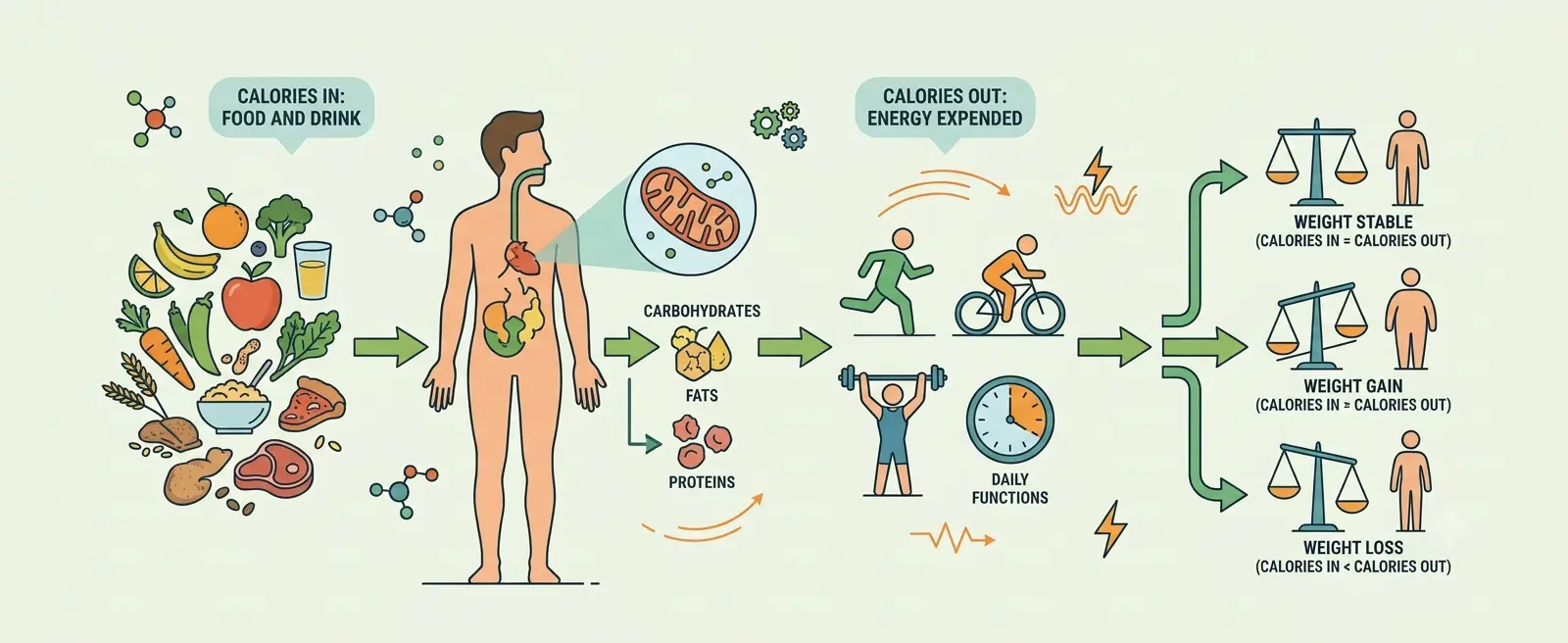
Calories measure the energy your body obtains from food and drinks. Your body uses this energy to perform essential functions such as breathing, maintaining body temperature, circulating blood, digesting food and moving your muscles.
Even when you are sleeping, your body continues to use energy.
Your daily calorie requirement includes energy used for basic body functions, everyday activities, digestion and exercise.
Your weight is influenced partly by the relationship between the calories you consume and the energy your body uses.
- Weight maintenance: You generally consume about as much energy as your body uses.
- Weight loss: You consistently consume less energy than your body uses.
- Weight gain: You consistently consume more energy than your body uses.
However, calories are only one part of healthy eating. Protein, fibre, vitamins, minerals and the overall quality of your diet are also important.
Interesting fact: Your body uses energy even when you are not exercising. This is why your daily calorie needs are not the same as the calories you burn during a workout.
2. How Many Calories Do Indians Need Per Day?
According to the energy requirements reported in the ICMR-NIN 2020 recommendations, daily calorie needs vary according to gender and physical activity. The following figures are reference estimates for healthy adults, not exact targets for every individual.
Daily Calorie Requirement for Indian Men and Women
| Activity Level | Adult Men | Adult Women |
|---|---|---|
| Sedentary lifestyle | 2,110 calories | 1,660 calories |
| Moderate physical activity | 2,710 calories | 2,130 calories |
| Heavy physical activity | 3,470 calories | 2,720 calories |
These reference figures use standard body weights of approximately 65 kg for men and 55 kg for women. Individual requirements can differ.
What Do These Activity Levels Mean?
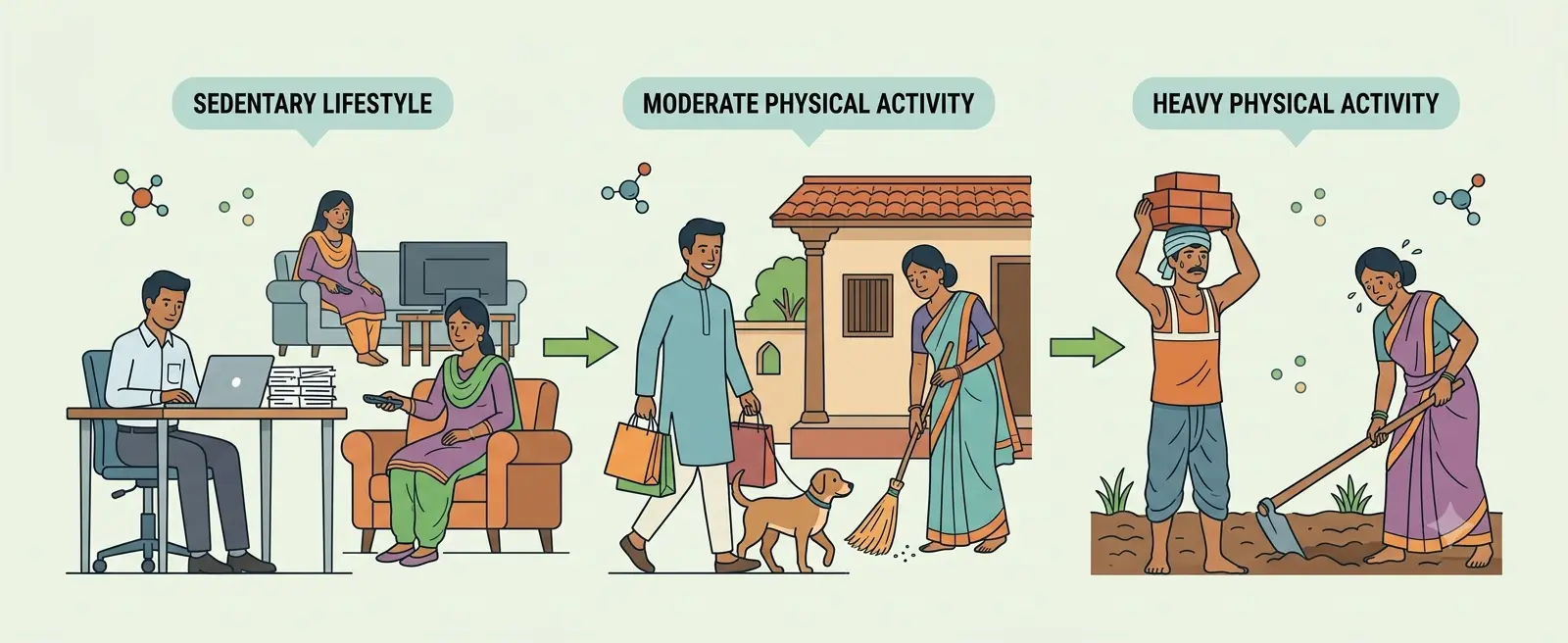
Sedentary lifestyle: You spend most of your day sitting, working at a computer, travelling or doing relatively little physical activity.
Moderate physical activity: You regularly walk, cycle, exercise or perform work that involves a reasonable amount of movement.
Heavy physical activity: Your occupation or training involves substantial physical effort, such as demanding manual labour or prolonged, strenuous activity.
These categories are broad guidelines. A person’s actual energy expenditure also depends on their body size, age, muscle mass and daily routine.
For example, two men of the same age may need different amounts of food if one works at a desk and the other performs physically demanding work.
3. Daily Calorie Requirements by Age
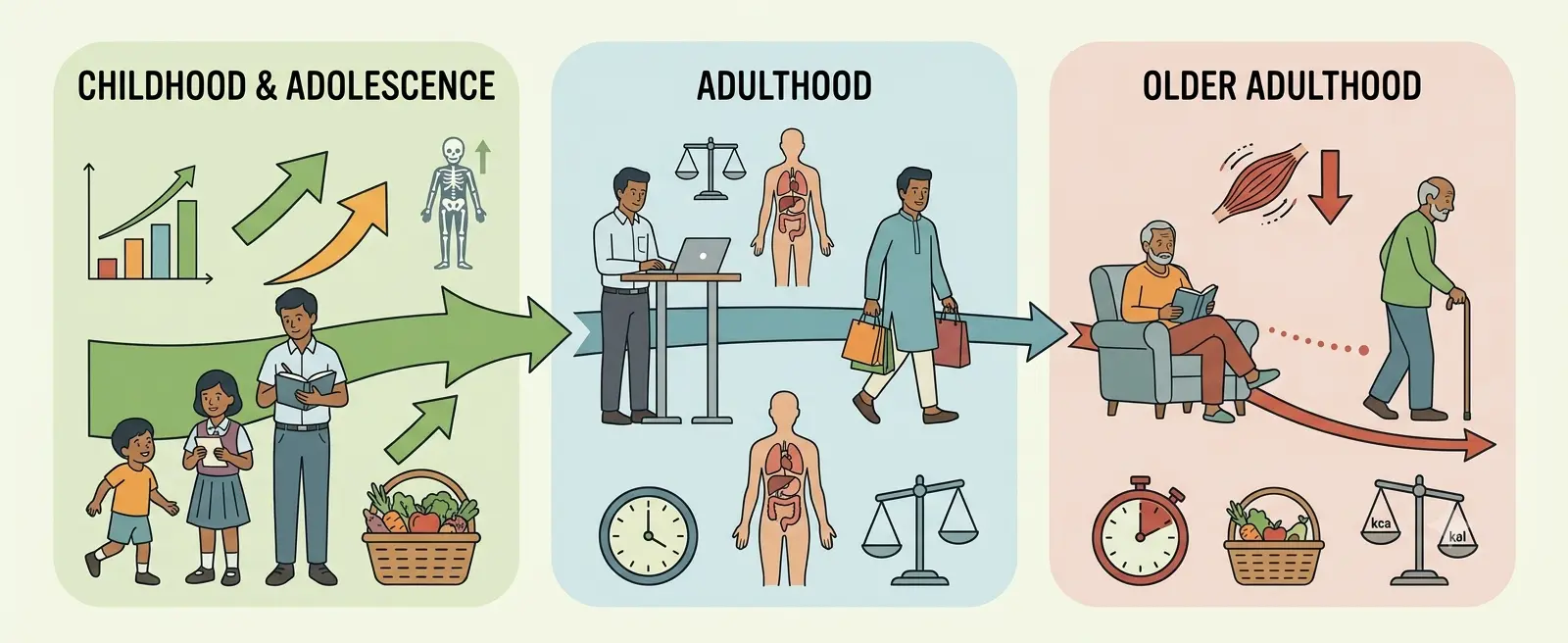
Age can affect calorie requirements because growth, body composition and physical activity change throughout life.
Children and teenagers need enough energy to support growth and development. Adults need energy to maintain their bodies and daily activities, while older adults may need fewer calories if their activity levels and muscle mass decline.
Here is a general overview:
| Age Group | What Affects Calorie Needs? |
|---|---|
| Children | Growth, development and play |
| Teenagers | Growth spurts, puberty and sports |
| Adults aged 19–40 | Body size, work, exercise and fitness goals |
| Adults aged 41–60 | Body composition, activity and health |
| Adults over 60 | Muscle mass, activity, health and nutritional needs |
There is no single calorie number that applies to everyone in an age group. A physically active older adult, for instance, may need more energy than a younger adult who is mostly inactive.
Interesting fact: Teenagers can have substantial energy needs because their bodies are still developing. Restricting calories excessively during this stage can compromise growth and nutritional intake.
4. How Many Calories Should You Eat to Lose Weight?
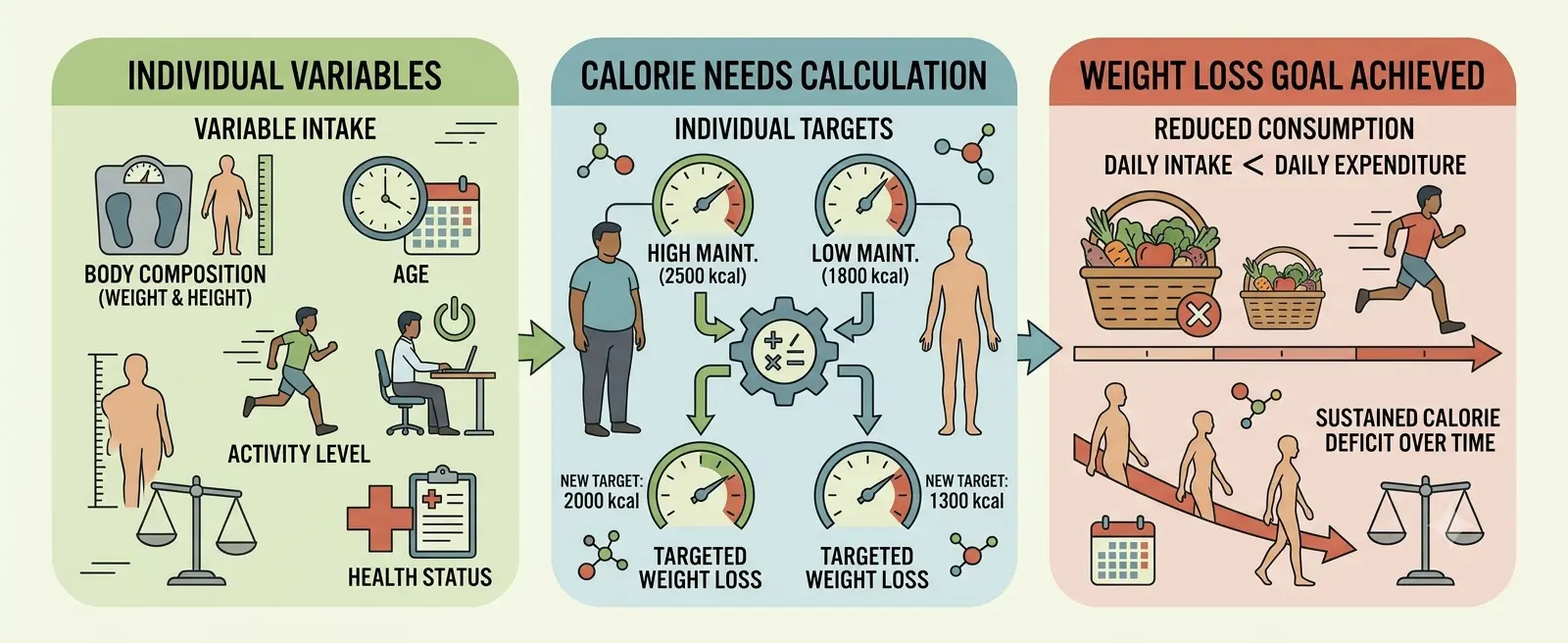
If your goal is weight loss, you generally need to consume fewer calories than your body uses over time.
However, the right calorie intake depends on your current weight, height, age, activity level and health. A person who maintains their weight on 2,500 calories daily will need a different weight-loss target from someone whose maintenance requirement is 1,800 calories.
Practical Steps for Healthy Weight Loss
1. Understand your maintenance calories.
Estimate how much energy you use daily based on your personal details and activity level.
2. Create a moderate calorie deficit.
Reduce your intake gradually rather than following a crash diet. A personalised target is more useful than choosing an arbitrary low number.
3. Include protein-rich foods.
Foods such as dal, beans, chickpeas, eggs, milk, curd, fish, chicken and tofu can help support muscle maintenance and make meals more satisfying.
4. Increase physical activity.
Walking, cycling, resistance training and other enjoyable activities can help you manage your weight.
5. Monitor your progress.
Observe your weight trend, energy levels, hunger and exercise performance over several weeks. Adjust your plan if necessary.
Avoid assuming that every Indian adult should eat 1,200 or 1,500 calories to lose weight. Such targets may be inadequate for some people, particularly those who are active or have higher energy needs. Very-low-calorie diets should only be followed with appropriate professional supervision.
5. How Many Calories Do You Need to Build Muscle?
Building muscle requires suitable training, adequate nutrition and recovery.
If your goal is muscle growth, you may need to eat enough calories to support your workouts and, depending on your circumstances, a modest calorie surplus.
Focus on three key areas:
- Protein: Include suitable protein sources throughout the day.
- Carbohydrates: Rice, oats, chapati, potatoes and other carbohydrate-rich foods provide energy for training.
- Healthy fats: Nuts, seeds and appropriate amounts of oils contribute energy and essential nutrients.
Strength training is also important. Simply eating more calories without an appropriate exercise routine may lead to additional body fat rather than the muscle growth you want.
If you are trying to lose fat while maintaining muscle, your approach will differ from that of someone trying to gain weight. Your calorie target should reflect your specific goal.
6. How Many Calories Are in Common Indian Foods?
Indian meals can provide energy, protein, fibre and other nutrients. However, calorie content varies according to portion size, ingredients, oil, ghee, sugar and cooking methods.
The following are illustrative estimates, not fixed values.
| Indian Food | Approximate Calories |
|---|---|
| 1 medium idli | 35–60 kcal |
| 1 plain dosa | 120–200 kcal |
| 1 medium chapati without added ghee | 80–120 kcal |
| 1 cup cooked white rice | 180–250 kcal |
| 1 cup cooked dal | 150–250 kcal |
| 1 boiled egg | 65–80 kcal |
| 100 g cooked chicken breast | 150–200 kcal |
| 1 medium banana | 80–120 kcal |
| 200 ml milk | 90–150 kcal |
| 1 tablespoon cooking oil | Approximately 120 kcal |
Actual values can fall outside these ranges depending on the recipe and serving size. Restaurant dishes, large portions and foods cooked with generous amounts of oil may contain considerably more calories.
For example, a plain dosa and a ghee roast dosa are not nutritionally identical. Similarly, the calorie content of a serving of rice depends on how much cooked rice you eat.
Interesting fact: Cooking oil can contribute a significant amount of energy to a meal. Measuring oil while cooking can help you understand your overall calorie intake without eliminating traditional Indian foods.
7. How Can You Manage Your Daily Calorie Intake?
You do not need to stop eating rice, dosa, idli or chapati to manage your calorie intake.
Instead, focus on portions and balance.
- Include vegetables in your main meals.
- Add protein sources such as dal, beans, eggs, curd, fish or chicken.
- Choose fruit instead of relying on sweets for every snack.
- Be mindful of sugary drinks, frequent fried snacks and oversized portions.
- Measure cooking oil when you are trying to understand your calorie intake.
- Drink water regularly.
- Combine a balanced diet with consistent physical activity.
You can also record your food intake for several days to understand your eating habits. The goal is not to track every calorie forever, but to develop a better understanding of portions and food choices.
If you have diabetes, kidney disease, are pregnant or breastfeeding, or have specific medical or nutritional needs, seek advice from a qualified healthcare professional before making substantial dietary changes.
Conclusion
So, how many calories do Indians need every day? The answer depends on your body, age, activity level and personal goals.
As a reference, ICMR-NIN 2020 estimates suggest approximately 2,110 calories for sedentary adult men and 1,660 calories for sedentary adult women, with higher requirements for more active individuals. These figures should be treated as starting points rather than exact prescriptions.
Whether you want to lose weight, build muscle or simply maintain a healthy lifestyle, focus on eating balanced meals, controlling portions and staying physically active.
Remember, the objective is not simply to eat fewer calories. It is to give your body the right amount of energy and nutrients to support a healthy, active life.