




Walking vs Running vs Cycling: Which Burns More Fat?
If you’re planning to lose weight, you’ve probably asked yourself this question: Walking vs Running vs Cycling for Fat Loss—which one actually burns more fat?
The good news is that all three are excellent forms of cardiovascular exercise. They help improve heart health, strengthen muscles, and increase calorie expenditure. However, the number of calories burned, the intensity of the workout, and your fitness level all determine which exercise is best for you.
Let’s compare walking, running, and cycling to help you choose the right workout for your fitness goals.

Walking for Weight Loss
Walking for weight loss is one of the easiest and safest ways to begin a fitness journey. It requires no special skills, can be done almost anywhere, and places minimal stress on your joints.
A brisk walk of 30–60 minutes each day can help create a calorie deficit, leading to gradual fat loss. Walking also improves blood circulation, reduces stress, and lowers the risk of lifestyle diseases like diabetes and hypertension.
Pros
- Beginner-friendly
- Low impact on knees and joints
- Easy to maintain consistently
- Suitable for all age groups
Calories Burned (Approx.)
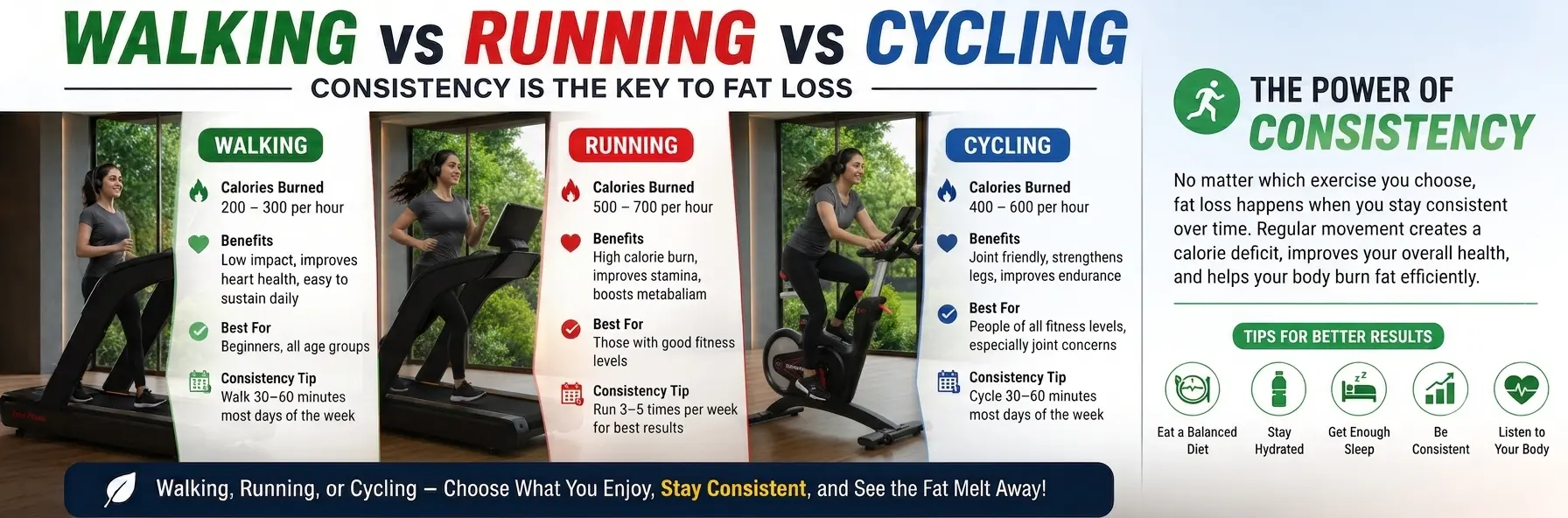
A 70 kg person burns about 200–300 calories per hour while brisk walking.

Running for Weight Loss
When discussing Running for Weight Loss, running is often considered the fastest way to burn calories. Because it involves higher intensity, your body uses more energy in a shorter period.
Running also creates the “afterburn effect” (Excess Post-exercise Oxygen Consumption), meaning your body continues burning calories even after you’ve finished exercising.
However, running isn’t ideal for everyone. People with joint problems, obesity, or previous injuries should begin cautiously or consult a healthcare professional.
Pros
- Highest calorie burn
- Improves cardiovascular endurance
- Builds stronger bones
- Saves time
Calories Burned (Approx.)
A 70 kg person burns around 500–700 calories per hour, depending on speed.

Cycling for Weight Loss
Cycling for Weight Loss has become increasingly popular because it’s enjoyable and easier on the joints than running. Whether you ride outdoors or use a stationary exercise bike, cycling provides an excellent cardio workout.
Cycling mainly strengthens the lower body while improving stamina and cardiovascular fitness. It is particularly suitable for people recovering from injuries or those looking for a low-impact exercise.
Pros
- Joint-friendly
- Great for improving endurance
- Strengthens legs and core
- Ideal for longer workouts
Calories Burned (Approx.)
A 70 kg person burns approximately 400–600 calories per hour, depending on speed and terrain.
Calories Burned Comparison
| Exercise | Approximate Calories Burned (1 Hour) |
|---|---|
| Walking | 200–300 Calories |
| Cycling | 400–600 Calories |
| Running | 500–700 Calories |
Key takeaway: Running burns the most calories per hour, followed by cycling, while walking burns the fewest. However, consistency is far more important than choosing the highest-calorie workout.
Which Exercise Burns More Fat?
Many people assume the workout that burns the most calories automatically burns the most fat. That’s only part of the picture.
Your body burns fat when you maintain a consistent calorie deficit over time. The Best Cardio Exercise is the one you can perform regularly without injury or burnout.
- If you’re a beginner, walking may help you stay consistent.
- If you’re looking for maximum calorie burn and have healthy joints, running is an excellent choice.
- If you want a balance between effectiveness and joint protection, cycling is a fantastic option.
The best long-term results often come from combining all three activities throughout the week.
Tips to Maximize Fat Loss
To get the most from your workouts:
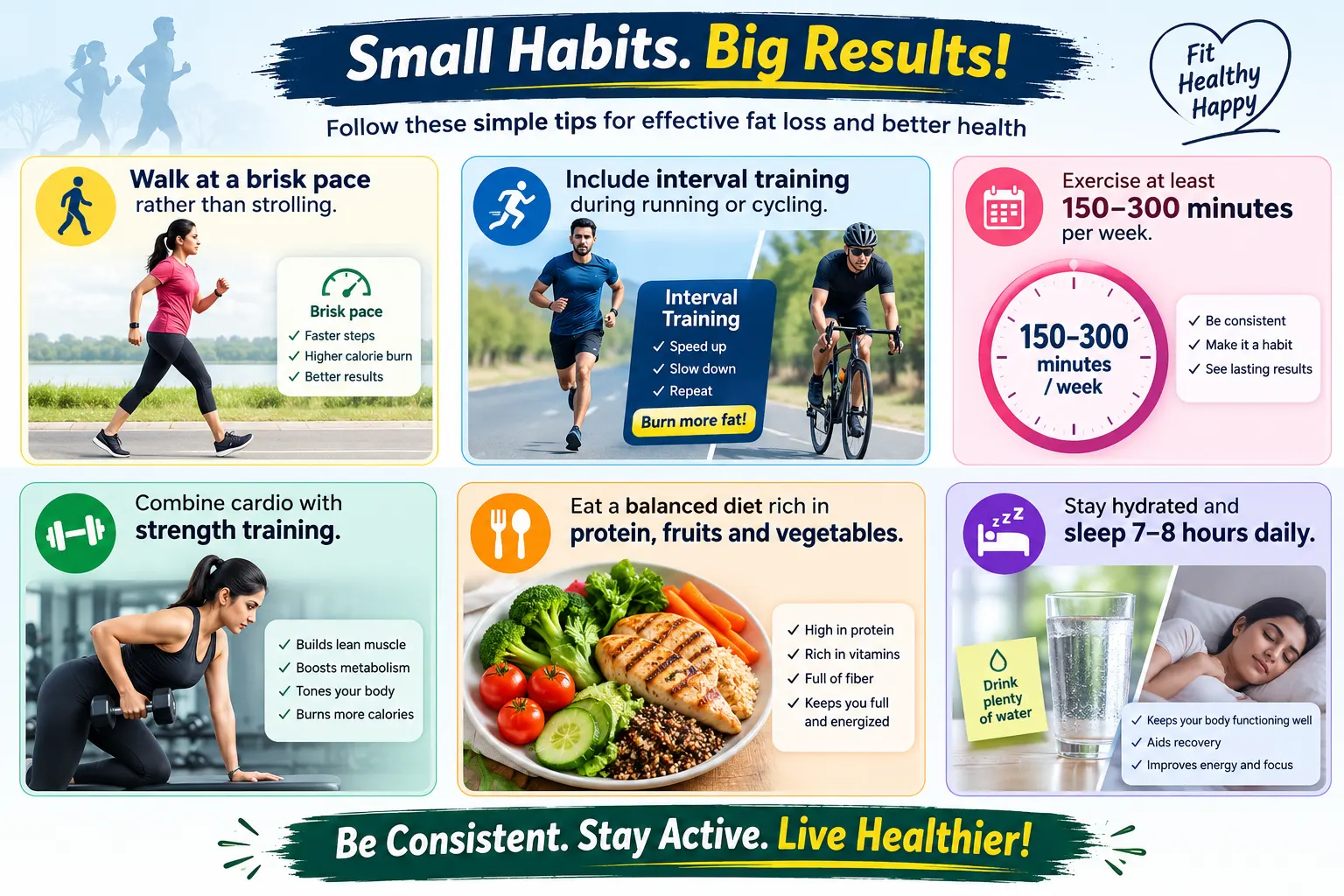
- Walk at a brisk pace rather than strolling.
- Include interval training during running or cycling.
- Exercise at least 150–300 minutes per week.
- Combine cardio with strength training.
- Eat a balanced diet rich in protein, fruits, and vegetables.
- Stay hydrated and sleep 7–8 hours daily.
Remember, no workout can compensate for poor eating habits. Nutrition and exercise work together for sustainable fat loss.